




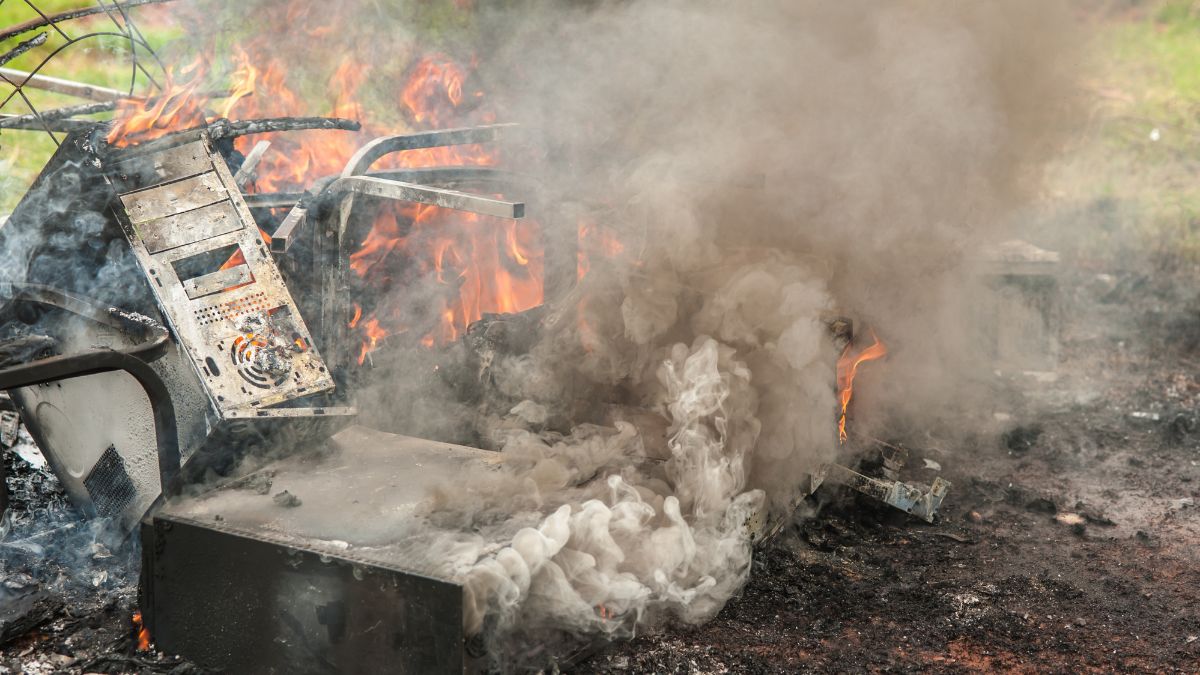

South Africa is sitting on an e-waste time bomb, with only 7% to 12% of all e-waste in the country being processed through formal recycling channels.
This is according to Sandile Ndlovu, an assistant researcher at the Interdisciplinary Centre for Digital Futures at the University of the Free State, who believes universities should lead the recycling shift.
“The statistics are quite shocking. If we look at the amount of e-waste that is being formally recycled in South Africa, it is about 7% to 12%,” Ndlovu told Cape Talk.
“That is a very low recycling rate of e-waste, given that South Africa is the second largest producer of e-waste on the African continent. We are second behind Egypt.”
He added that awareness about e-waste recycling and the risks associated with improper electronics recycling is lacking.
“A recent study revealed that about 60% of Gen Zs and millennials do not know what e-waste is, and 50% do not know the threat posed by e-waste to the environment and human health,” said Ndlovu.
He explained that the situation has worsened with phenomena like built-in obsolescence, where manufacturers intentionally design products with shorter lifespans.
“Sometimes it’s not even that the product is no longer functional, but it’s just that you cannot upgrade to the latest software, and you cannot get the most relevant features at the time,” said Ndlovu.
Ndlovu emphasised that much e-waste holds value as it often contains precious metals like gold, silver, and copper.
“If this type of waste is properly recycled, then it means that precious metals can be recovered and used as secondary raw materials,” he said.
“There are a lot of statistics on the amount of value that has been recovered from the proper or formal recycling of e-waste. There’s definitely value.”
Ndlovu said many university students frequently use electronic devices like laptops, which are often informally discarded when students upgrade or the device becomes unusable.
“What I’m suggesting is that there should be e-waste recycling facilities placed in university campuses so that the university community has a viable option to discard their e-waste,” he said.
He added that, in some cases, discarded laptops used for university purposes could be refurbished and given to those who need them, such as children in a rural secondary school.
Makro vouchers for e-waste
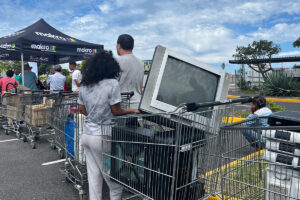
In October 2023, the E-Waste Recycling Authority (ERA) hosted an event through which South Africans could earn up to R2,400 in Makro vouchers for recycling their old electronics.
The event allowed participants to earn up to R600 in Makro vouchers per day, making it possible to earn up to R2,400 in vouchers over the two-weekend event.
The event was designed to raise awareness about the growing volumes of e-waste in South Africa, and it listed numerous eligible products across categories like small, medium, and large appliances, and ICT equipment.
“A good rule of thumb is, if it is battery-powered or powered by electricity, it is likely to be considered e-waste,” the ERA said.
In August 2024, MyBroadband asked the ERA if it would consider hosting other events of a similar nature. It stated that it plans to offer a similar event, but could not share additional information.
“Yes, something similar is in the works,” said ERA marketing manager Grant McPherson.
The ERA also never confirmed whether its next event would be with the same partner. Makro owner Massmart told MyBroadband that it hadn’t held any similar events since the one in October 2023.
“Our programme remains South Africa’s longest-running, retailer-led e-waste recycling initiative and has now collected over 1,550 tonnes of e-waste,” it said.
“We also intend to pilot e-waste bins at selected Builders Warehouse stores in the coming months and remain open to the prospect of collaborating with our partner to incentivise customers in the future.”
This article was originally published here.